
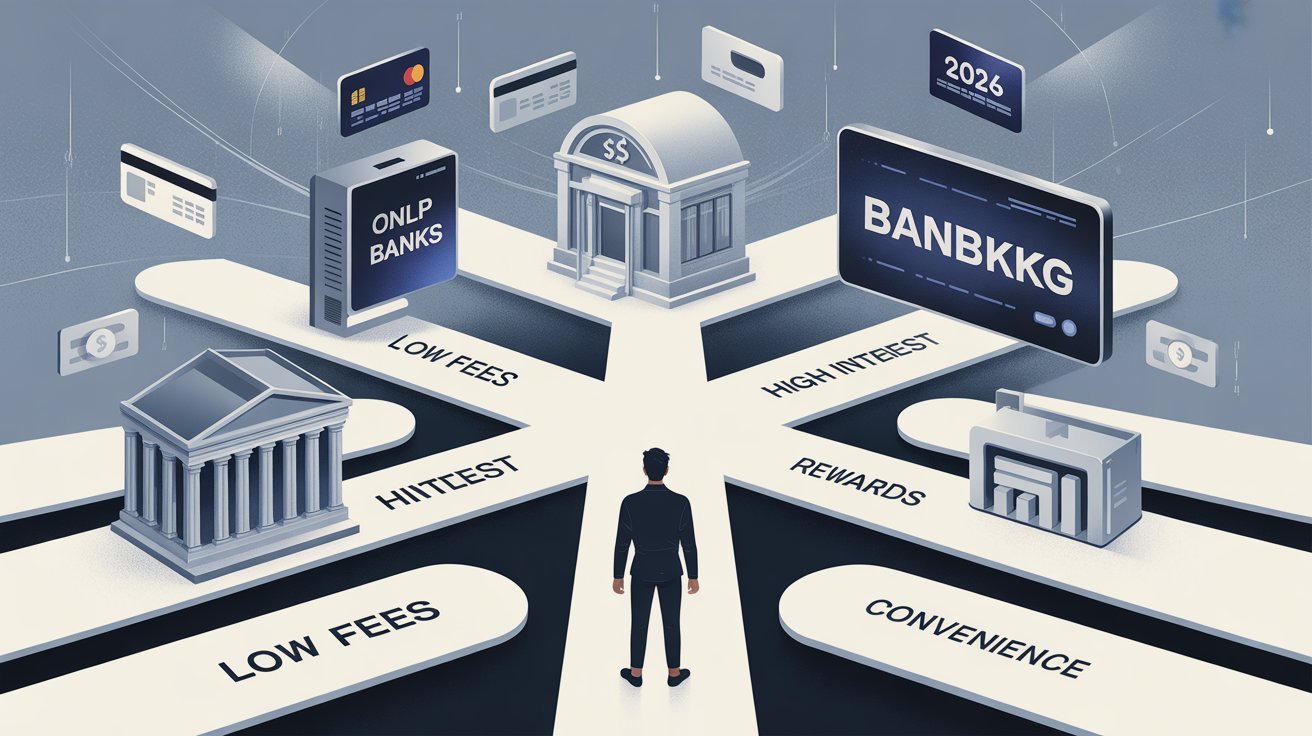

Choosing the best bank for a checking account has become more complex than ever. What used to be a simple decision—opening an account at the nearest bank—has now turned into a strategic financial choice that can impact your daily spending, savings habits, and even long-term financial stability.
In 2026, the banking landscape is highly competitive. Traditional banks, online-only institutions, and fintech companies are all offering different features to attract customers. Some focus on convenience and accessibility, while others emphasize low fees, high interest rates, or rewards programs. As a result, consumers are faced with more options than ever before, but also more confusion.
A major issue many people face is choosing a checking account without fully understanding the costs and benefits. Hidden fees, limited ATM access, and poor digital experiences can turn what seems like a good account into a frustrating financial tool. In fact, many account holders lose money every year due to avoidable maintenance fees and transaction charges.
The importance of making the right choice has increased due to rising living costs and economic uncertainty. Every dollar saved on fees or earned through rewards can make a difference, especially for individuals managing tight budgets or trying to improve their financial health.
A critical insight is that the best checking account is not necessarily the one with the biggest name. Instead, it is the one that aligns with your financial behavior, whether that involves frequent transactions, online banking, or maintaining a higher balance.
This guide will help you understand how checking accounts work, what features matter most, and how to choose the best bank based on your specific needs. You will also learn about current trends, expert strategies, and common mistakes to avoid.
In most real-world cases, people who take the time to compare banks and understand their options end up saving more money and enjoying a better banking experience. The goal of this guide is to give you the clarity needed to make that decision confidently.
What is a Checking Account?
A checking account is a type of bank account designed for everyday financial transactions. It allows users to deposit money, withdraw funds, make payments, and manage daily expenses efficiently. Unlike savings accounts, which are typically used for storing money long-term, checking accounts are built for frequent use and easy access.
In practical terms, a checking account acts as the central hub for your financial activity. It is where your income is deposited, bills are paid, and purchases are made using debit cards or online payment systems. Because of this, the quality of your checking account directly affects your daily financial experience.
To better understand the key components, the table below breaks down essential terms and real-world applications:
| Term | Meaning | Real Example |
|---|---|---|
| Checking Account | Account for daily transactions | Paying bills and groceries |
| Debit Card | Card linked to account | Buying items in stores |
| Direct Deposit | Automatic income deposit | Salary sent to account |
| ATM Access | Withdraw cash anywhere | Taking out $100 from ATM |
| Overdraft | Spending more than balance | Paying even with low funds |
The reason checking accounts exist is to provide liquidity and convenience. People need quick access to their money for everyday use, and checking accounts fulfill that role by allowing unlimited or frequent transactions without restrictions.
In most real-world cases, checking accounts are used alongside savings accounts. While savings accounts help build financial security, checking accounts ensure that daily financial operations run smoothly.
Another important aspect is flexibility. Modern checking accounts often come with mobile apps, online banking, and additional features such as budgeting tools or spending insights. These features make it easier to track expenses and manage money effectively.
However, not all checking accounts are the same. Some banks charge monthly fees, limit ATM access, or offer minimal digital tools, while others provide fee-free accounts with advanced features and rewards.
Understanding these differences is essential before choosing the best bank for your checking account.
Why Choosing the Best Bank for a Checking Account Matters for Financial Success
A checking account is often viewed as a simple financial tool, but in reality, it plays a central role in managing daily finances and long-term financial health. The bank you choose can directly influence how much you spend on fees, how easily you access your money, and how efficiently you manage your financial life.
In most real-world cases, people underestimate the financial impact of their checking account. Small monthly fees, ATM charges, and overdraft penalties may seem insignificant individually, but over time they can add up to hundreds of dollars per year. This is especially important in 2026, where economic pressure and rising living costs make financial efficiency more critical than ever.
Choosing the best bank for a checking account is not just about convenience; it is about optimizing your financial system. A well-chosen account can help you avoid unnecessary costs, improve money management, and even generate small rewards or interest.
Key Benefits of the Right Checking Account
The right checking account offers more than just basic banking functions. It provides financial advantages that can improve your overall financial situation.
Benefits Overview
| Benefit | Impact Level | Who It Helps |
|---|---|---|
| Low or no fees | High | Budget-conscious users |
| Easy access to funds | High | Everyday spenders |
| Strong mobile banking | High | Digital users |
| Rewards or cashback | Medium | Frequent shoppers |
| Overdraft protection | Medium | Users with variable income |
The benefits listed above highlight how a checking account can influence both daily convenience and long-term financial outcomes. For example, avoiding monthly fees alone can save a user between $60 and $180 per year, depending on the bank. Over time, these savings can be redirected toward investments or essential expenses.
Financial Outcomes of Choosing the Right Bank
A well-structured checking account can lead to measurable financial improvements. One of the most immediate effects is cost reduction. Banks that offer no-fee accounts or easy fee waivers allow users to retain more of their money.
Another important outcome is improved cash flow management. With features such as real-time transaction tracking and spending insights, users gain better control over their finances. This reduces the likelihood of overspending and helps maintain a stable financial position.
Additionally, some banks offer rewards programs or interest-bearing checking accounts. While the returns may not be significant compared to investment accounts, they still provide incremental financial benefits that accumulate over time.
In most real-world cases, individuals who switch from high-fee accounts to low-cost or no-fee options experience immediate financial improvement without changing their income.
Who Should Care About Choosing the Right Checking Account?
The importance of selecting the best bank for a checking account varies depending on individual financial behavior, but certain groups benefit more significantly.
People with frequent transactions, such as those who use debit cards daily or pay bills regularly, need accounts with low fees and reliable access. Even small transaction fees can quickly accumulate for this group.
Individuals with variable income, including freelancers and small business owners, benefit from accounts that offer overdraft protection and flexible features. This helps manage cash flow fluctuations more effectively.
Digital users, who rely heavily on mobile banking and online payments, should prioritize banks with advanced digital platforms. A strong mobile app can simplify financial management and improve overall convenience.
Real-World Financial Example
To illustrate the impact, consider two individuals with similar income levels but different checking accounts.
| Scenario | Monthly Fee | Annual Cost | Outcome |
|---|---|---|---|
| Traditional bank account | $12 | $144 | Reduced savings |
| No-fee online account | $0 | $0 | Full savings retained |
Over a five-year period, the individual using the traditional account would lose $720 in fees alone, without receiving additional value. This demonstrates how seemingly small costs can have a long-term financial impact.
Expert Insight
In most real-world cases, the difference between a good and a bad checking account is not obvious at first. Many users continue using the same bank out of habit, even when better options are available.
A common mistake I’ve seen is ignoring fee structures and focusing only on brand reputation. While well-known banks offer reliability, they are not always the most cost-effective choice. Evaluating actual features and costs provides a more accurate basis for decision-making.
Latest Banking Trends for Checking Accounts (2024–2026)
The banking industry has changed dramatically over the past few years, and checking accounts are at the center of this transformation. In 2026, the competition between traditional banks and digital-first institutions has created better options for consumers, but it has also made decision-making more complex.
The most important trend is the shift toward low-cost and no-fee banking. Many online banks have eliminated monthly maintenance fees, forcing traditional banks to adapt by offering fee waivers or alternative account types.
Key Market Data
| Year | Data | What It Means |
|---|---|---|
| 2024 | Over 70% of users prefer mobile banking apps | Digital banking dominance |
| 2025 | Growth in no-fee checking accounts | Reduced cost competition |
| 2026 | Increase in cashback & rewards accounts | Banks competing on value |
| 2026 | Rise of online-only banks | Fewer physical branch visits |
Rise of Digital Banks
One of the most significant changes is the rapid growth of online-only banks such as Ally Bank and Discover Bank. These institutions operate without physical branches, allowing them to reduce costs and pass those savings on to customers in the form of no fees and better features.
In most real-world cases, digital banks offer:
- No monthly maintenance fees
- Higher interest rates (in some cases)
- Advanced mobile apps
- Faster account setup
This makes them particularly attractive for younger users and individuals who are comfortable managing finances entirely online.
Traditional Banks Are Adapting
Established banks like Chase Bank and Bank of America are not losing relevance, but they are evolving. Many have improved their mobile apps, reduced fees under certain conditions, and introduced rewards programs to remain competitive.
These banks still maintain a key advantage: physical branch networks. This is important for users who need in-person services, such as cash deposits, financial advice, or complex transactions.
In most real-world cases, traditional banks remain the preferred choice for individuals who value face-to-face interaction and established brand trust.
Consumer Behavior is Changing
Consumer expectations have shifted significantly. Today’s users expect more than just basic banking; they want tools that help them manage their finances in real time.
This includes features such as:
- Instant transaction notifications
- Spending insights and budgeting tools
- Seamless integration with payment apps
- Fast and secure online transfers
As a result, banks that fail to provide a strong digital experience risk losing customers to more innovative competitors.
The Shift Toward Value-Based Banking
Another important trend is the move toward value-added checking accounts. Instead of simply storing money, modern accounts now offer additional benefits such as cashback rewards, interest earnings, and financial insights.
Banks like Capital One and Discover Bank have introduced features that reward everyday spending, making checking accounts more financially beneficial.
In most real-world cases, users are increasingly choosing banks that provide tangible value rather than just basic services.
What These Trends Mean for You
These trends highlight a clear shift in the banking industry toward efficiency, transparency, and user-focused features. For consumers, this means more opportunities to find accounts that match their financial habits and preferences.
If you prioritize convenience and low costs, online banks may offer the best solution. If you prefer in-person support and a full-service banking experience, traditional banks still provide strong value.
The key is to align your choice with how you actually use your checking account.
Expert Insight
In most real-world cases, the biggest mistake users make is sticking with outdated banking options that no longer meet their needs. The market has evolved, and better alternatives are now widely available.
A common pattern I’ve seen is that users who switch to modern, low-fee accounts often improve their financial efficiency immediately without changing their income or spending habits.
Expert Insights on Choosing the Best Bank for a Checking Account
Selecting the best bank for a checking account is not about finding a universally “perfect” option, but about identifying the account that aligns most effectively with your financial behavior. Financial advisors often emphasize that the real value of a checking account comes from how well it integrates into your daily financial system.
In most real-world cases, users who choose accounts based on convenience alone—such as proximity to a branch—end up paying higher fees or missing out on better features. On the other hand, those who evaluate costs, usability, and long-term benefits tend to achieve better financial outcomes.
One important insight is that checking accounts should be treated as financial tools rather than static accounts. The right account should reduce friction in daily transactions, minimize unnecessary costs, and provide useful features that support better money management.
What Experts Look for in a Checking Account
Financial experts typically evaluate checking accounts based on efficiency, cost, and usability. A strong account should allow users to access funds easily while maintaining low or no fees.
Banks like Ally Bank and Capital One are often recognized for their cost efficiency, while institutions such as Chase Bank are valued for their accessibility and extensive networks.
The key is understanding that each bank excels in different areas. There is no single bank that dominates across all categories, which is why personal preference and financial habits play such a significant role.
Step-by-Step Strategy to Choose the Best Checking Account
Choosing the right checking account requires a structured approach rather than a quick decision.
The first step is evaluating your financial habits. Consider how often you use your account, whether you rely on cash withdrawals, and how frequently you make digital payments. This helps determine whether you need a bank with strong ATM access or advanced online features.
The second step is analyzing fees. Many traditional banks charge monthly maintenance fees, overdraft fees, and ATM charges. In contrast, online banks often eliminate these costs. In most real-world cases, switching to a low-fee account provides immediate financial benefits.
The third step involves assessing digital tools. Modern banking is heavily dependent on mobile apps and online platforms. A strong digital experience allows users to manage their finances more efficiently, track spending, and avoid errors.
The fourth step is considering additional benefits such as rewards or interest. While these features may not be the primary factor, they can provide extra value over time, especially for frequent users.
Hidden Strategies Most People Ignore
One overlooked strategy is comparing total annual cost rather than just monthly fees. Some accounts may appear affordable but include hidden charges that accumulate over time.
Another important strategy is aligning the account with income flow. For example, individuals with consistent direct deposits may benefit from accounts that waive fees under specific conditions. This allows them to enjoy the benefits of traditional banks without incurring costs.
A common approach used by experienced users is maintaining multiple accounts. For instance, one account may be used for daily transactions, while another is used for savings or budgeting purposes. This separation improves financial organization and reduces the risk of overspending.
Why Many People Choose the Wrong Bank
A major reason people select the wrong checking account is habit. Many individuals continue using the same bank they opened years ago without reassessing whether it still meets their needs.
Another issue is focusing too much on brand recognition. While well-known banks offer reliability, they are not always the most cost-effective or feature-rich options available.
In most real-world cases, users who fail to compare options end up paying more in fees or missing out on better features offered by newer or digital banks.
Comparison of Key Decision Factors
| Factor | What to Look For | Why It Matters |
|---|---|---|
| Fees | Low or no monthly fees | Saves money long-term |
| Access | ATM & branch availability | Convenience |
| Digital Tools | Strong mobile app | Easy money management |
| Rewards | Cashback or interest | Extra value |
| Flexibility | No minimum balance | Financial freedom |
Expert Insight
In most real-world cases, the best checking account is not the one with the most features, but the one with the least friction. The easier it is to use and the less it costs, the more effective it becomes as a financial tool.
A common mistake I’ve seen is choosing accounts based on promotional offers rather than long-term usability. Short-term incentives rarely compensate for ongoing fees or poor user experience.
Real-World Case Study (Choosing the Best Checking Account)
To understand how the best bank for a checking account impacts real financial outcomes, consider the example of two individuals with similar income levels but different banking choices.
Both individuals earn around $3,500 per month and use their checking accounts for daily expenses, bill payments, and debit card purchases. However, their banking experiences differ significantly based on their account selection.
Case Study Overview
| Person | Bank Type | Monthly Fees | Features Used | Annual Outcome |
|---|---|---|---|---|
| User A | Traditional bank | $12 | Basic checking | Lost $144/year in fees |
| User B | Online bank | $0 | Digital tools + cashback | Saved $120+ yearly |
What Happened
User A chose a traditional bank without evaluating fee structures. Over time, monthly maintenance charges and occasional ATM fees reduced overall savings. Although the bank was reliable, it provided limited financial value.
User B selected a modern online bank with no monthly fees and integrated budgeting tools. This allowed better financial tracking and eliminated unnecessary costs. In addition, cashback features provided small but consistent rewards.
In most real-world cases, the difference between these two approaches is not income—it is banking choice.
Why It Matters
This comparison highlights a key financial truth: small recurring fees can significantly impact long-term savings. Even a $10–$15 monthly fee can accumulate into hundreds of dollars annually.
A better checking account does not increase income, but it helps preserve more of it.
Comparison of Popular Checking Account Options
Different banks offer different strengths, and the “best” option depends on user needs.
Major Bank Comparison
| Bank | Monthly Fees | Strengths | Best For |
|---|---|---|---|
| Chase Bank | Yes (waivable) | Large ATM network | In-person banking users |
| Bank of America | Yes (waivable) | Rewards program | Full-service customers |
| Wells Fargo | Yes (waivable) | Branch access | Traditional banking users |
| Ally Bank | No | No fees + interest | Digital-first users |
| Capital One | No | No minimum balance | Flexible banking needs |
| Discover Bank | No | Cashback debit rewards | Everyday spenders |
Real Banking Scenarios
Scenario 1: Daily Cash User
A user who frequently withdraws cash benefits more from traditional banks like Chase or Bank of America due to large ATM networks and physical branches.
Scenario 2: Online-Only User
A digital-first user who rarely visits branches benefits more from banks like Ally Bank or Capital One, which offer no-fee accounts and strong mobile apps.
Scenario 3: Budget-Conscious User
A user focused on saving money benefits from no-fee accounts such as Discover Bank, where avoiding monthly charges directly improves financial efficiency.
Scenario 4: Rewards-Focused User
A user who uses debit cards frequently may benefit from cashback features, making Discover Bank or similar accounts more attractive.
Tools That Help You Choose the Right Bank
Selecting the best checking account becomes easier when using comparison tools and budgeting apps.
Useful Tools Overview
| Tool | Purpose | Benefit |
|---|---|---|
| Bank comparison platforms | Compare fees & features | Better decision-making |
| Budgeting apps | Track spending habits | Identify best account type |
| Fee calculators | Estimate annual costs | Avoid hidden charges |
| Mobile banking demos | Test usability | Check user experience |
Expert Insight
In most real-world cases, users do not switch banks often enough to optimize their financial situation. Many stay with accounts that no longer fit their needs simply due to convenience or habit.
A common mistake I’ve seen is ignoring long-term costs in favor of short-term familiarity. Over time, this leads to unnecessary financial leakage through fees and missed benefits.
FAQ
1. What is the best bank for a checking account in 2026?
The best bank depends on your needs. Online banks like Ally Bank are great for no fees, while traditional banks like Chase Bank are better for in-person services and ATM access.
2. Which checking account has no monthly fees?
Many online banks such as Capital One and Discover Bank offer no monthly maintenance fees, making them popular choices for cost-conscious users.
3. Are online checking accounts safe?
Yes, most online banks are safe as long as they are FDIC-insured. They offer the same protection as traditional banks and often include advanced security features like biometric login and fraud alerts.
4. What is the easiest checking account to open?
Online banks usually offer the fastest and easiest account setup. In many cases, accounts can be opened in under 10–15 minutes with minimal documentation.
5. Do checking accounts earn interest?
Some checking accounts do earn interest, but rates are generally lower than savings accounts. Online banks are more likely to offer interest-bearing checking options.
6. Can I switch my checking account easily?
Yes, switching is straightforward. Most banks provide assistance for transferring direct deposits and recurring payments to your new account.
Related Topics
You may also like:
Conclusion
Choosing the best bank for a checking account is one of the most important financial decisions for everyday money management. While it may seem simple on the surface, the differences between banks can significantly impact your long-term financial efficiency.
The key takeaway is that there is no single “best” bank for everyone. Instead, the right choice depends on how you use your money, how often you access your account, and whether you prioritize low fees, convenience, or rewards.
In most real-world cases, online banks such as Ally Bank, Capital One, and Discover Bank offer strong value due to low or no fees and modern digital tools. Meanwhile, traditional banks like Chase Bank and Bank of America remain strong choices for users who value physical branches and in-person support.
The smartest approach is to evaluate your financial habits first, then choose a bank that aligns with them. This ensures that your checking account supports your lifestyle rather than creating unnecessary costs or limitations.
Ultimately, a well-chosen checking account is not just a place to store money—it is a financial tool that can help you save, manage, and optimize your everyday spending more effectively.