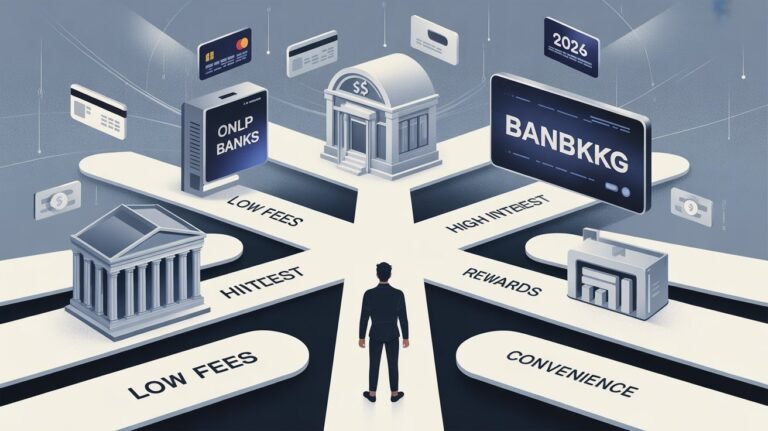
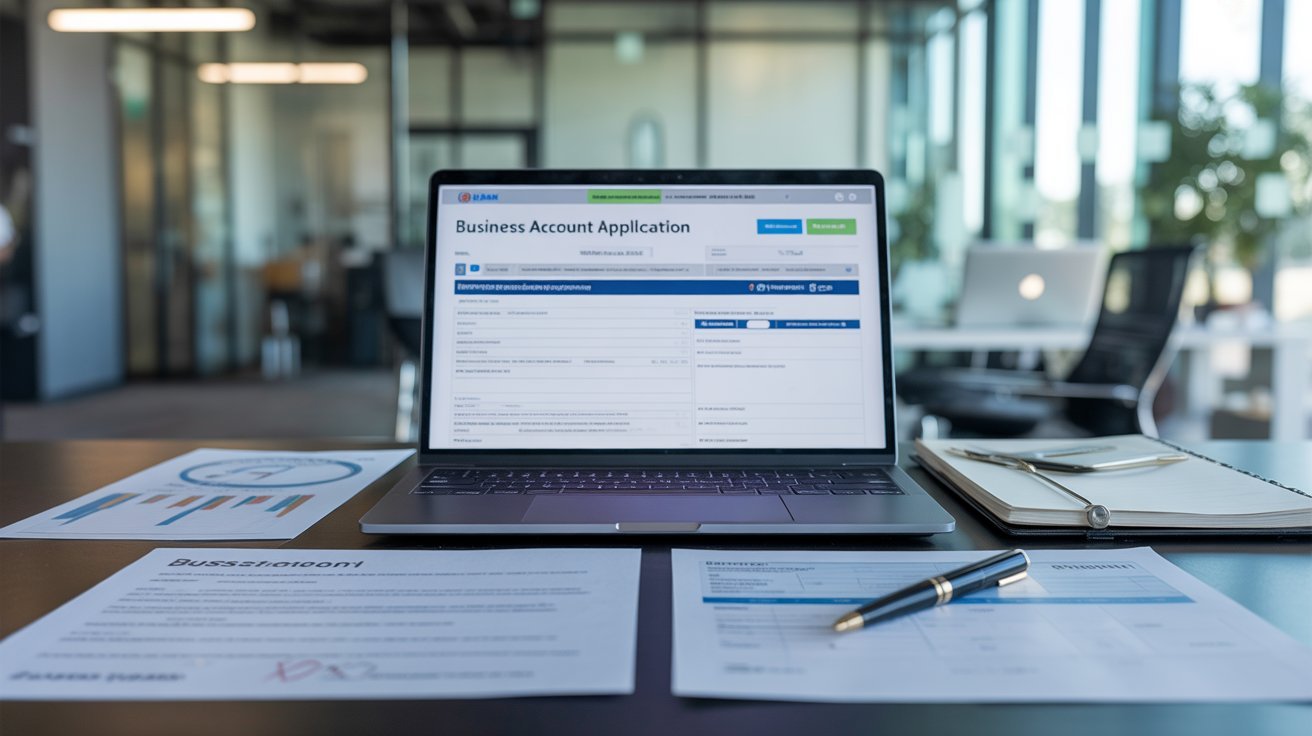

Starting a business comes with a long list of financial decisions, and one of the first questions many entrepreneurs ask is: what do I need to open a business checking account? It sounds simple, but the reality is often more confusing than expected.
Many new business owners underestimate the importance of setting up a proper business bank account. They either delay the process or use personal accounts, which can lead to accounting issues, tax complications, and even legal risks. In some cases, mixing personal and business finances makes it difficult to track expenses or prove business legitimacy.
This matters even more in 2026. With increasing financial regulations, digital transactions, and tax reporting requirements, having a dedicated business checking account is no longer optional—it’s essential.
A key reality is that businesses without proper financial separation often struggle with organization and credibility. Many entrepreneurs fail not because of poor ideas, but because of weak financial structure early on.
In most real-world cases, opening a business checking account early helps you:
- Track income and expenses clearly
- Simplify tax filing
- Build financial credibility
This guide will walk you through everything you need to know—from understanding what a business checking account is, to the exact documents required, and how to choose the best option for your situation.
What is a Business Checking Account?
A business checking account is a bank account specifically designed to handle financial transactions for a business. Unlike personal accounts, it separates business income and expenses from personal finances.
Banks like Chase Bank and Bank of America offer business checking accounts tailored to different business sizes, from freelancers to large companies.
These accounts allow you to:
- Receive payments from clients
- Pay business expenses
- Manage cash flow
- Maintain financial records
Key Concepts Explained
| Term | Meaning | Real Example |
|---|---|---|
| Business Checking Account | Account for business transactions | Receiving client payments |
| EIN (Employer Identification Number) | Business tax ID | Used when opening account |
| Operating Expenses | Business costs | Rent, supplies, salaries |
| Cash Flow | Money moving in/out | Monthly revenue vs expenses |
| Business Banking | Financial services for businesses | Loans, accounts, cards |
Why Business Checking Accounts Exist
Business checking accounts exist to create a clear financial boundary between personal and business activities. This separation is crucial for legal protection, accurate bookkeeping, and financial management.
For example, if you run a small business and use your personal account for everything, it becomes difficult to track which expenses are business-related. This can create problems during tax season or audits.
In most real-world cases, businesses that separate their finances early operate more efficiently and avoid costly mistakes.
Real-World Use Case
Consider two small business owners:
| Scenario | Account Type | Result |
|---|---|---|
| Owner A | Personal account | Confusing records, tax issues |
| Owner B | Business checking account | Clear finances, easier taxes |
This simple difference can have a major impact on how smoothly a business operates.
What Do You Need to Open a Business Checking Account?
This is the most important section—and where most confusion happens.
Opening a business checking account is not complicated, but it does require specific documents depending on your business structure. In most real-world cases, delays happen because applicants are missing one key document or provide inconsistent information.
Banks like Chase Bank or Bank of America follow strict compliance rules to verify your identity and your business legitimacy.
Basic Requirements (All Businesses)
No matter what type of business you run, you will typically need the following:
Core Requirements Table
| Requirement | What It Is | Why It’s Needed |
|---|---|---|
| Valid ID | Passport or driver’s license | Verify identity |
| Business Name | Registered or operating name | Account setup |
| Business Address | Physical or registered address | Legal verification |
| Contact Information | Phone/email | Communication |
| Initial Deposit | Starting balance ($0–$500+) | Activate account |
These are the minimum requirements, but most businesses will need additional documentation depending on structure.
Documents Required by Business Type
Different business types require different paperwork. This is where many applicants get confused.
Sole Proprietor Requirements
| Document | Purpose | Example |
|---|---|---|
| Personal ID | Identity verification | Passport |
| DBA (if applicable) | Business name registration | “John’s Cleaning Services” |
| Social Security Number | Tax identification | SSN |
Sole proprietors have the simplest process because the business is legally tied to the owner.
LLC (Limited Liability Company)
| Document | Purpose | Example |
|---|---|---|
| Articles of Organization | Proof of LLC formation | State registration |
| EIN (Employer ID Number) | Tax identification | IRS-issued number |
| Operating Agreement | Ownership structure | Member details |
Corporation (C-Corp or S-Corp)
| Document | Purpose | Example |
|---|---|---|
| Articles of Incorporation | Legal formation | State document |
| EIN | Tax ID | Required |
| Corporate Resolution | Authorization to open account | Signed document |
Why Banks Require These Documents
Banks are legally required to verify both your identity and your business. This process is known as KYC (Know Your Customer) and helps prevent fraud, money laundering, and illegal activity.
In most real-world cases, banks are not being difficult—they are following regulatory requirements. Providing accurate and complete documents speeds up the process significantly.
Minimum Deposit Requirements
Most banks require an initial deposit to activate your business checking account.
Deposit Comparison
| Bank Type | Typical Minimum Deposit |
|---|---|
| Traditional banks | $100 – $500 |
| Online banks | $0 – $100 |
| Premium accounts | $500+ |
Online banks often offer lower entry requirements, making them attractive for startups and small businesses.
Online vs In-Person Account Opening
You can open a business checking account either online or by visiting a branch.
Comparison Table
| Method | Pros | Cons |
|---|---|---|
| Online | Fast, convenient | Limited support |
| In-branch | Personal assistance | Time-consuming |
In most real-world cases, online applications are faster, but complex businesses may benefit from in-person guidance.
Common Mistakes That Delay Approval
A common mistake I’ve seen is submitting incomplete or inconsistent information. Even small discrepancies—like mismatched addresses—can delay approval.
Mistakes to Avoid
| Mistake | Consequence | Fix |
|---|---|---|
| Missing EIN | Application rejected | Apply before opening |
| Incorrect business name | Delays | Match legal documents |
| Incomplete paperwork | Processing issues | Double-check documents |
| Using personal info incorrectly | Compliance issues | Separate business data |
In most real-world cases, opening a business checking account is straightforward if you prepare properly. The process becomes difficult only when documents are missing or unclear.
A smart approach is to gather all documents before applying and verify that all details match exactly across forms.
Why a Business Checking Account Matters for Financial Success
Opening a business checking account is more than just a formality—it directly impacts how your business operates, grows, and stays compliant.
In most real-world cases, businesses that fail to separate their finances early struggle with bookkeeping, taxes, and financial clarity. What seems like a small step at the beginning can become a major problem later.
Financial advisors often recommend opening a business account as soon as you start generating income. This creates a clean financial structure that supports long-term growth.
Banks like Chase Bank and Bank of America specifically design business accounts to handle transactions, reporting, and scaling needs.
Key Financial Benefits
A business checking account provides multiple advantages that go beyond basic money management.
Benefits Overview
| Benefit | Impact Level | Who It Helps |
|---|---|---|
| Financial separation | High | All business owners |
| Easier tax filing | High | Freelancers & companies |
| Professional credibility | High | Client-facing businesses |
| Expense tracking | High | Growing businesses |
| Access to business services | Medium | Expanding companies |
Why These Benefits Matter
Financial separation is critical. Mixing personal and business funds can create confusion, errors, and even legal issues.
Easier tax filing is another major advantage. When all transactions are in one account, calculating income and expenses becomes straightforward.
Professional credibility also improves. Clients and partners are more likely to trust a business that operates with a dedicated bank account.
Financial Outcomes of Using a Business Account
Using a business checking account can lead to measurable improvements in how your business handles money.
Real Example
| Scenario | Without Business Account | With Business Account |
|---|---|---|
| Expense tracking | Confusing | Organized |
| Tax preparation | Time-consuming | Efficient |
| Financial reporting | Inaccurate | Clear |
| Growth planning | Difficult | Structured |
In most real-world cases, businesses with proper financial systems grow faster because they can make better decisions based on accurate data.
Cost vs Value Analysis
Some business owners hesitate to open a business account due to fees. However, the value often outweighs the cost.
Cost Comparison
| Factor | Without Business Account | With Business Account |
|---|---|---|
| Monthly fees | $0 | $0–$30 |
| Time spent on accounting | High | Low |
| Risk of errors | High | Low |
| Professional image | Weak | Strong |
Even if you pay a small monthly fee, the time saved and reduced errors can be worth significantly more.
Who Really Needs a Business Checking Account?
Not every situation is the same, but in most cases, the following groups benefit the most:
- Freelancers and self-employed individuals
- Small business owners
- Startups
- LLCs and corporations
Even side businesses can benefit from having a separate account.
When Should You Open One?
The best time to open a business checking account is as soon as you start earning or spending money for your business.
Waiting too long can lead to:
- Mixed transactions
- Difficult bookkeeping
- Tax complications
In most real-world cases, early setup prevents future problems.
Real-World Scenario
Imagine two freelancers earning $3,000 per month:
| Scenario | Setup | Outcome |
|---|---|---|
| Freelancer A | Uses personal account | Struggles during tax season |
| Freelancer B | Uses business account | Smooth financial management |
This simple difference can save hours of work and reduce stress.
A common mistake I’ve seen is assuming a business account is only necessary for large companies. In reality, even small businesses benefit significantly from proper financial separation.
In most real-world cases, the earlier you set up a business checking account, the easier your financial management becomes over time.
Expert Insights & Advanced Strategies
Opening a business checking account is easy. Choosing the right one and using it strategically—that’s where most business owners either gain an advantage or make costly mistakes.
In most real-world cases, successful businesses don’t just open an account—they align their banking setup with their financial workflow. This means selecting a bank that supports how money moves in and out of the business.
Banks like Chase Bank and Bank of America offer full-service options, while online banks focus more on low fees and digital convenience. The right choice depends on your business model.
A key insight financial advisors often highlight is this:
Your bank should reduce friction, not create it.
What Experts Do Differently
Experienced business owners approach banking with a system, not guesswork.
They:
- Choose accounts based on transaction volume and business type
- Separate income, expenses, and savings into different accounts
- Automate financial processes whenever possible
- Monitor fees and optimize regularly
In most real-world cases, this structured approach leads to better cash flow control and fewer financial errors.
Step-by-Step Strategy
Step 1 – Evaluate Your Business Needs
Before opening an account, you need clarity on how your business operates financially.
Example Business Snapshot
| Category | Value |
|---|---|
| Monthly Revenue | $8,000 |
| Monthly Expenses | $5,000 |
| Transactions per month | 60–120 |
| Payment types | Online + bank transfers |
This helps you choose an account that fits your transaction volume and avoids unnecessary fees.
Step 2 – Choose the Right Bank Type
Not all banks are the same. Your choice should match your business priorities.
Bank Type Comparison
| Bank Type | Best For | Limitation |
|---|---|---|
| Traditional bank | Full services, in-person support | Higher fees |
| Online bank | Low fees, convenience | No branches |
| Fintech platforms | Fast setup, integrations | Limited services |
In most real-world cases, startups prefer online banks, while established businesses lean toward traditional institutions.
Step 3 – Prepare Documents in Advance
This step is often underestimated but critical for a smooth process.
Make sure:
- All documents are up-to-date
- Names match exactly across forms
- Your EIN and business registration are ready
Preparation can reduce approval time from days to hours.
Step 4 – Open the Account (Online or In-Branch)
You can open your business checking account:
- Online (fast and convenient)
- In-branch (guided and personalized)
Online applications typically take 10–30 minutes, while in-branch setups may take longer but offer more support.
Step 5 – Set Up Your Financial System
This is where most beginners stop—but experts go further.
After opening your account:
- Link payment processors (Stripe, PayPal, etc.)
- Set up automatic transfers
- Create a separate savings account for taxes
- Track all transactions consistently
This step transforms your account from a simple tool into a financial system.
Hidden Strategies Most Business Owners Ignore
One powerful strategy is the “multi-account method.” Instead of using one account, businesses use multiple:
- Income account
- Expense account
- Tax savings account
This creates clarity and prevents overspending.
Another overlooked tactic is fee optimization. Many banks waive fees if you maintain a minimum balance or meet transaction requirements.
A third strategy is choosing banks that integrate with accounting software, which saves time and reduces manual work.
Why Most People Choose the Wrong Account
A common mistake I’ve seen is choosing a bank based only on brand name or convenience.
This often leads to:
- High fees
- Transaction limits
- Poor scalability
In most real-world cases, the wrong account becomes a bottleneck as the business grows.
Key Decision Framework
| Factor | What to Focus On | Why It Matters |
|---|---|---|
| Fees | Monthly + transaction costs | Protect profits |
| Transactions | Limits per month | Avoid penalties |
| Accessibility | Online vs branch | Convenience |
| Integrations | Accounting tools | Efficiency |
| Scalability | Future growth support | Long-term fit |
Expert Insight
In most real-world cases, the best business checking account is not the cheapest—it’s the one that supports your workflow with the least friction.
A common mistake is opening an account and never revisiting it. As your business grows, your banking needs change, and your account should evolve with it.
Real Financial Case Study (Business Checking Account in Action)
To understand the real impact of opening a business checking account, let’s look at two small business owners with similar income—but very different financial setups.
Both run online service businesses earning around $6,000 per month.
Case Study Breakdown
| Year | Owner A (No Business Account) | Owner B (Business Account) | Result |
|---|---|---|---|
| 2025 | Used personal account | Opened account with Chase Bank | Different setups |
| 2025–2026 | Mixed personal & business expenses | Separated all transactions | Clear vs messy records |
| Tax season | Spent 20+ hours organizing | Filed taxes in few hours | Time saved |
| Growth stage | Struggled to track cash flow | Managed finances easily | Better decisions |
What Happened
Owner A tried to manage everything in one account. Over time, transactions became difficult to track, expenses were unclear, and tax preparation became stressful.
Owner B used a dedicated business checking account from the beginning. This allowed for clear tracking of income and expenses, easier tax reporting, and better financial planning.
Key Insight
In most real-world cases, the difference is not just convenience—it’s control and clarity, which directly impact business growth.
Business Checking Account vs Personal Account
Comparison Table
| Feature | Personal Account | Business Checking Account | Impact |
|---|---|---|---|
| Financial separation | None | Full separation | Better organization |
| Tax preparation | Difficult | Easy | Saves time |
| Professional image | Weak | Strong | Builds trust |
| Expense tracking | Manual | Structured | Accuracy |
| Growth readiness | Limited | Scalable | Business expansion |
Practical Business Scenarios
Scenario 1: Freelancer or Solo Business
A freelancer receiving payments from clients benefits from a business account because it separates income and simplifies tax reporting.
Scenario 2: Growing Small Business
A small business with increasing transactions needs a structured system. A business checking account helps track expenses and manage cash flow effectively.
Scenario 3: Startup Founder
Startups often need credibility when working with partners or investors. Having a business account adds professionalism and legitimacy.
Scenario 4: E-commerce Business
Online sellers dealing with frequent transactions benefit from automation and integration with payment platforms.
Tools & Resources
Using the right tools alongside your business checking account can improve efficiency and decision-making.
Useful Tools
| Tool | Purpose | Why It Helps |
|---|---|---|
| Accounting software | Track income & expenses | Saves time |
| Invoicing tools | Send client invoices | Faster payments |
| Budget trackers | Manage spending | Better control |
| Payment processors | Accept payments | Business growth |
Why This Section Matters
Many business owners underestimate the long-term impact of financial organization. What starts as a simple account decision can influence how efficiently your business operates.
In most real-world cases, businesses with structured financial systems grow faster because they can make informed decisions based on accurate data.
Expert Insight
A common mistake I’ve seen is waiting too long to open a business checking account. By the time business owners realize they need one, their finances are already mixed and harder to organize.
The most effective approach is to set up your financial structure early and build your systems as your business grows.
FAQ
1. What documents do I need to open a business checking account?
In most cases, you’ll need:
- A valid government-issued ID
- Business registration documents (LLC, corporation, or DBA)
- EIN (Employer Identification Number) or SSN (for sole proprietors)
- Business address and contact details
Banks like Chase Bank and Bank of America may also require additional verification depending on your business type.
2. Can I open a business checking account online?
Yes. Many banks allow full online applications. This process is usually faster and can take as little as 10–30 minutes if your documents are ready.
3. Do I need an EIN to open a business account?
If you have an LLC or corporation, an EIN is required. Sole proprietors may use their Social Security Number, but having an EIN is often recommended for privacy and professionalism.
4. How much money do I need to open a business checking account?
It depends on the bank. Most require an initial deposit between $0 and $500. Some premium accounts may require higher amounts.
5. Can I use my personal bank account for business?
You can, but it’s not recommended. Mixing personal and business finances can create tax issues, accounting confusion, and legal risks.
6. How long does it take to open a business checking account?
Online applications can be approved within hours or a few days. In-branch applications may take longer depending on verification requirements.
Related Topics
You may also like:
Conclusion
Opening a business checking account is one of the most important steps you can take when starting or growing a business. While the process may seem complicated at first, it becomes straightforward once you understand the requirements and prepare the necessary documents.
The key takeaway is simple: you need proper identification, business registration documents, and a clear understanding of your financial setup. With these in place, opening an account is fast and efficient—especially with modern online banking options.
In today’s financial environment, separating personal and business finances is not just a best practice—it’s essential. It improves organization, simplifies tax filing, and builds credibility with clients and partners.
In most real-world cases, business owners who set up their accounts early avoid confusion, save time, and make better financial decisions. On the other hand, those who delay often face unnecessary complications later.
Banks like Chase Bank and Bank of America provide reliable options, but the best choice depends on your business needs, transaction volume, and growth plans.
The smartest approach is to choose an account that fits your workflow, minimizes fees, and supports your long-term goals. Remember, your business checking account is not just a place to store money—it’s a tool that helps you manage, track, and grow your business.