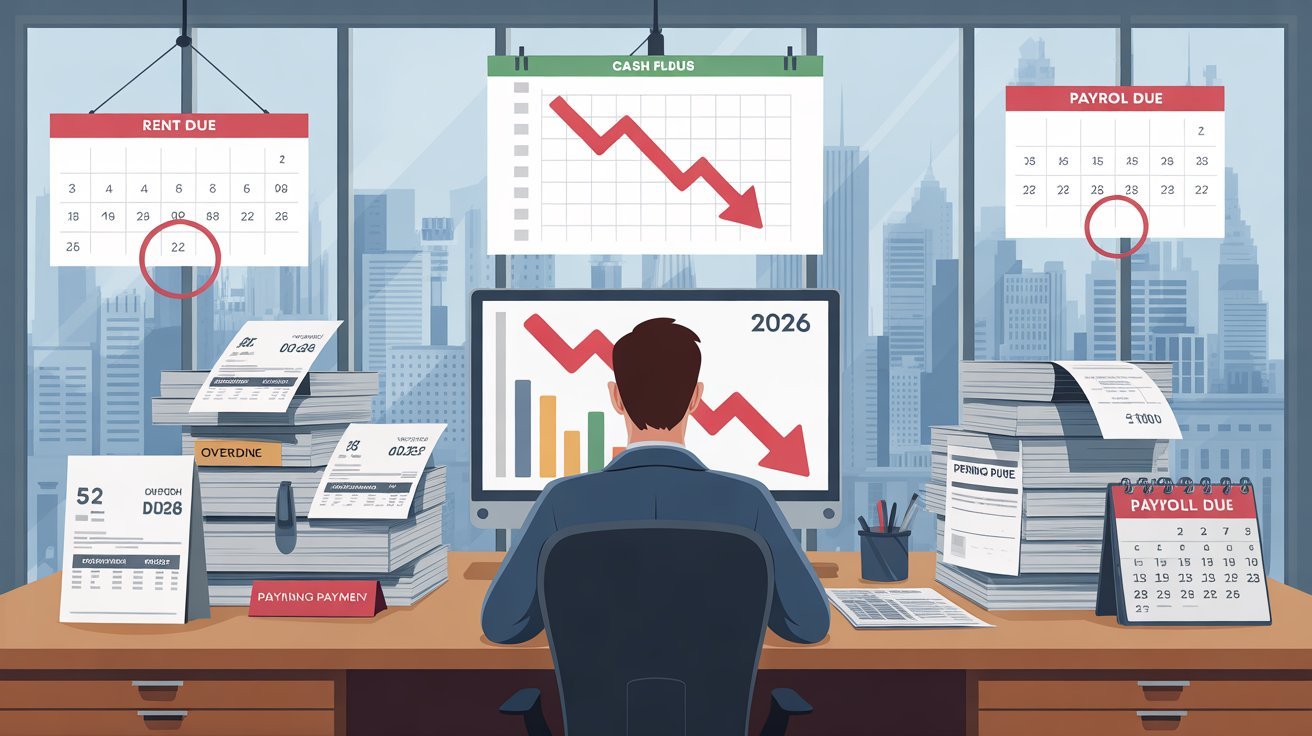

Cash flow problems are one of the most common reasons small businesses struggle or fail—not lack of customers or ideas. Even profitable businesses can face financial pressure when income arrives late but expenses are immediate.
In 2026, this issue is even more serious. Rising operational costs, delayed payments from clients, and unpredictable market conditions are putting pressure on small business liquidity. Many businesses are profitable on paper but still unable to pay rent, payroll, or suppliers on time.
Here is a critical reality: nearly 60% of small businesses experience cash flow shortages at least once per year.
This is where a small business cash flow loan becomes essential. It provides fast access to working capital to cover short-term financial gaps, stabilize operations, and maintain business continuity.
However, not all cash flow loans are the same. Some are expensive short-term advances, while others are structured financing tools that support growth.
Many business owners fail not because they lack revenue—but because they mismanage cash timing.
This guide explains how cash flow loans work, when to use them, and how to choose the right option without falling into debt traps.
Latest Statistics & Cash Flow Trends (2024–2026)
| Year | Data | Meaning |
|---|---|---|
| 2024 | 58% SMEs reported cash gaps | Cash instability common |
| 2025 | 32% increase in short-term loans | Rising demand |
| 2026 | 45% businesses use working capital loans | Standard financing tool |
| 2026 | Avg cash gap duration: 30–60 days | Payment delay issue |
Why This Matters
Cash flow instability is not a small business problem—it is a structural financial issue affecting global SMEs.
Businesses that manage cash flow proactively survive longer and scale faster than those reacting to crises.
What is a Small Business Cash Flow Loan?
A small business cash flow loan is short-term financing designed to cover operational expenses when income is temporarily insufficient.
Key Terms
| Term | Meaning | Example |
|---|---|---|
| Working Capital | Daily operating money | Payroll, rent |
| Cash Flow Gap | Timing mismatch income/expenses | Late customer payments |
| Short-Term Loan | Fast repayment loan | 3–18 months |
| Revenue-Based Loan | Repayment based on sales | % of monthly revenue |
Real-World Use
- Paying employees during slow months
- Covering rent during delayed payments
- Restocking inventory quickly
Why Small Business Cash Flow Loans Matter for Financial Stability
Cash flow is the lifeline of any business. Even companies with strong sales can struggle if money is not available at the right time.
A small business cash flow loan helps bridge this timing gap, ensuring operations continue without disruption.
Key Benefits Overview
| Benefit | Impact Level | Who It Helps |
|---|---|---|
| Covers short-term expenses | High | All SMEs |
| Prevents operational disruption | High | Service businesses |
| Improves financial stability | High | Growing companies |
| Supports payroll continuity | Critical | Employers |
| Enables opportunity capture | Medium | Fast-growing firms |
Explanation
In most real-world cases, businesses fail not because they are unprofitable—but because they run out of cash at the wrong moment.
For example:
- A company may have $50,000 in unpaid invoices
- But still need $10,000 immediately for payroll
A cash flow loan solves this mismatch.
Strategic Insight
Financial experts often say:
“Cash flow matters more than profit on paper.”
This is because liquidity determines whether a business can survive short-term obligations.
Types of Small Business Cash Flow Loans
Not all cash flow financing is the same. Understanding the differences is critical before borrowing.
1. Working Capital Loans
These are traditional short-term loans used to cover daily business expenses.
| Feature | Details |
|---|---|
| Loan type | Fixed repayment |
| Term | 3–24 months |
| Best for | Stable businesses |
| Usage | Rent, payroll, inventory |
When to Use
- Seasonal revenue drops
- Temporary cash shortages
- Planned expansion gaps
2. Business Line of Credit
A flexible borrowing option where you only use what you need.
| Feature | Details |
|---|---|
| Access | Revolving credit |
| Interest | Only on used amount |
| Flexibility | High |
| Best for | Ongoing cash flow management |
When to Use
- Unpredictable expenses
- Ongoing operational needs
- Emergency funding access
3. Merchant Cash Advance (MCA)
A cash advance repaid through future sales percentage.
| Feature | Details |
|---|---|
| Repayment | % of daily sales |
| Speed | Very fast approval |
| Cost | Higher fees |
| Best for | High credit card sales businesses |
Risk Note
MCAs are fast but expensive. A common mistake I’ve seen is using MCAs for long-term financing, which increases debt pressure.
4. Short-Term Business Loans
Fixed-term loans designed for fast funding.
| Feature | Details |
|---|---|
| Approval | Fast |
| Term | 3–18 months |
| Cost | Medium-high interest |
| Best for | Emergency cash flow needs |
Loan vs Cash Advance vs Credit Line
| Option | Speed | Cost | Flexibility | Best Use |
|---|---|---|---|---|
| Working Capital Loan | Medium | Medium | Low | Planned expenses |
| Credit Line | Fast | Low–Medium | High | Ongoing needs |
| MCA | Very Fast | High | Medium | Emergency sales-based funding |
Key Insight
In most real-world cases:
- Loans = stability
- Credit lines = flexibility
- MCAs = emergency only
Expert Insights & Advanced Cash Flow Loan Strategies
Understanding cash flow loans is not enough—the real advantage comes from how they are used strategically. Businesses that succeed with financing treat it as a timing tool, not “extra money.”
What Experts Do Differently
Successful business owners and financial advisors focus on:
- Borrowing only to solve timing gaps, not losses
- Matching repayment schedules with revenue cycles
- Using loans to generate positive cash flow outcomes, not just survival
In most real-world cases, poor loan usage—not the loan itself—is what creates financial stress.
Hidden Strategies Beginners Often Miss
1. Cash Flow Timing Strategy (MOST IMPORTANT)
The goal is to align incoming and outgoing cash.
Example:
- Client payments arrive in 45 days
- Payroll is due every 15 days
- Cash flow loan bridges the gap
2. ROI-Based Borrowing Rule
Never borrow without calculating return impact.
| Item | Value |
|---|---|
| Loan amount | $10,000 |
| Monthly repayment | $500 |
| Revenue increase | $1,500/month |
✔ Positive ROI → Safe borrowing decision
3. Debt-to-Cash Flow Ratio Control
Healthy businesses maintain controlled borrowing levels.
Safe guideline:
- Loan payments should not exceed 15–25% of monthly cash flow
4. Emergency vs Growth Separation
A common mistake I’ve seen is using emergency loans for expansion.
| Loan Type | Correct Use |
|---|---|
| Cash flow loan | Cover gaps |
| Growth loan | Expand operations |
Mixing both increases financial risk.
Hidden Costs of Cash Flow Loans
Cash flow loans often look simple, but total cost can be higher than expected.
Cost Breakdown
| Cost Type | Description |
|---|---|
| Interest rate | Cost of borrowing |
| Origination fees | Processing charges |
| Daily deductions | MCA-style repayments |
| Late fees | Penalties for delays |
| Renewal costs | Re-borrowing fees |
Real Example
| Category | Amount |
|---|---|
| Loan principal | $15,000 |
| Interest | $3,000 |
| Fees | $1,200 |
| Total repayment | $19,200 |
Key Insight
In many cases, true borrowing cost can be 20–35% higher than the loan amount.
Cash Flow Optimization System
Before taking a loan, optimize your internal cash flow system.
Step 1: Improve Receivables
- Invoice faster
- Offer early payment discounts
- Reduce payment delays
Step 2: Control Payables
- Negotiate longer payment terms
- Prioritize essential expenses
- Avoid unnecessary fixed costs
Step 3: Build Cash Buffer
Experts recommend maintaining:
2–3 months of operating expenses in reserve
Step 4: Match Loan Timing to Revenue Cycle
| Business Type | Loan Timing Strategy |
|---|---|
| Seasonal business | Borrow before peak season |
| Service business | Borrow during invoice delays |
| Retail business | Borrow for inventory cycles |
Expert Insight
A common mistake I’ve seen is borrowing too late—when cash flow is already negative. The best results come from proactive borrowing, not reactive borrowing.
Step-by-Step Strategy to Secure a Small Business Cash Flow Loan (ACTIONABLE SYSTEM)
Getting approved for a cash flow loan is not random—it follows a predictable financial pattern. Businesses that prepare properly get faster approvals and better terms.
Step 1 – Analyze Your Cash Flow Position
Before applying, understand your real financial situation.
| Factor | Example |
|---|---|
| Monthly revenue | $12,000 |
| Monthly expenses | $9,000 |
| Cash gap | $3,000 |
| Credit score | Fair |
| Loan need | Short-term buffer |
Why This Step Matters
Lenders evaluate your ability to repay—not just your need for money. Clear financial awareness improves approval chances significantly.
Step 2 – Define the Loan Purpose Clearly
A strong application always has a specific use case.
Examples:
- Cover payroll delays
- Purchase inventory
- Stabilize seasonal income gaps
Why It Matters
In most real-world cases, vague loan requests get rejected faster than structured ones.
Step 3 – Choose the Right Loan Type
| Situation | Best Option |
|---|---|
| Short-term gap | Working capital loan |
| Ongoing needs | Line of credit |
| Emergency sales-based funding | Merchant cash advance |
Strategic Insight
A common mistake I’ve seen is choosing the fastest loan instead of the most cost-effective one.
Step 4 – Strengthen Your Approval Profile
Lenders focus on risk indicators.
Key Approval Factors
| Factor | Importance |
|---|---|
| Revenue consistency | High |
| Bank account activity | High |
| Credit score | Medium–High |
| Time in business | Medium |
How to Improve Approval Odds
- Maintain consistent deposits
- Reduce existing debt
- Keep clean financial records
- Avoid overdrafts
Step 5 – Apply with Multiple Lenders
Do not rely on a single lender.
Smart Application Strategy
- Apply to 2–3 lenders simultaneously
- Compare interest rates and terms
- Avoid accepting the first offer blindly
Why This Works
Different lenders evaluate risk differently, so approval terms can vary significantly.
Step 6 – Plan Repayment Before Funding
Many businesses focus only on getting approved—not repayment.
Repayment Planning Checklist
| Item | Action |
|---|---|
| Monthly payment | Match with cash flow |
| Revenue forecast | Ensure stability |
| Emergency buffer | Maintain reserves |
Expert Insight
A common mistake I’ve seen is borrowing without a repayment strategy, which leads to cash flow pressure even after funding is received.
Credit Requirements & Approval Reality
Cash flow loans are more flexible than traditional bank loans.
Typical Requirements
| Requirement | Level |
|---|---|
| Credit score | 500–700 (varies) |
| Monthly revenue | $5,000+ common |
| Business history | 3–6 months minimum |
| Bank activity | Regular deposits required |
Key Insight
In most real-world cases, cash flow lenders prioritize revenue over credit score.
Real Financial Case Study
This case study shows how a small business used a cash flow loan to stabilize operations and grow.
Business Overview
A mid-sized cleaning service company experienced inconsistent cash flow due to delayed client payments. Despite generating steady revenue, payroll and supply costs created monthly pressure.
Case Study Breakdown
| Year | Action | Result |
|---|---|---|
| 2023 | Relied on unpaid invoices | Frequent cash shortages |
| 2024 | Took $12,000 cash flow loan | Stabilized payroll |
| 2025 | Added credit line + improved invoicing | 30% revenue growth |
| 2026 | Optimized cash cycle system | Consistent positive cash flow |
What Happened
Initially, the business struggled due to timing gaps between income and expenses. The cash flow loan was used to bridge payroll and supply costs while waiting for client payments.
Why It Worked
- Improved liquidity immediately
- Allowed business continuity
- Prevented service interruptions
- Created time to restructure invoicing system
Lessons Learned
- Cash flow loans should solve timing gaps, not losses
- Improving internal systems is just as important as funding
- Combining financing with process improvement leads to long-term stability
In most real-world cases, businesses that combine financing with operational improvements achieve stronger results than those relying on loans alone.
Common Mistakes to Avoid
Many businesses misuse cash flow loans, leading to unnecessary debt.
| Mistake | Consequence | Fix |
|---|---|---|
| Borrowing without cash flow plan | Debt pressure | Forecast revenue first |
| Using high-cost loans long-term | Excess repayment cost | Switch to lower-rate financing |
| Ignoring repayment structure | Cash shortages | Align payments with income |
| Over-borrowing | Financial instability | Borrow only what is needed |
| Mixing loan types | Confusion & inefficiency | Separate short-term vs long-term funding |
Real Consequences
- Businesses may pay 20–50% more in total cost due to poor loan selection
- Cash flow pressure increases when repayment exceeds income cycles
- Poor planning can force repeated borrowing cycles
Practical Insight
A common mistake I’ve seen is treating cash flow loans as permanent capital instead of temporary support tools.
Tools & Resources for Cash Flow Management
Using the right tools improves financial control and reduces dependency on emergency loans.
Financial Tools
| Tool Type | Purpose | Use Case |
|---|---|---|
| Cash flow forecast tools | Predict income gaps | Monthly planning |
| Accounting software | Track expenses | Daily operations |
| Invoice tools | Speed up payments | Reduce delays |
| Loan calculators | Estimate repayment | Before borrowing |
Funding Platforms
- Online lenders → fast approval, higher rates
- Banks → lower rates, stricter approval
- Alternative lenders → flexible criteria
- Credit lines → ongoing access to funds
Why Tools Matter
In most real-world cases, businesses that track cash flow consistently reduce emergency borrowing needs significantly.
Advanced Cash Flow Scenarios
Scenario 1 — Seasonal Business
- Revenue fluctuates monthly
- Uses short-term cash flow loans before peak season
- Repays during high-sales periods
Scenario 2 — Growing Service Business
- Needs payroll stability
- Uses line of credit for flexibility
- Gradually reduces reliance on loans
Scenario 3 — Startup Business
- Limited credit history
- Uses small cash advances
- Focuses on building financial record
Scenario 4 — High-Revenue Business with Delayed Payments
- Uses loans to bridge invoice delays
- Optimizes receivables system over time
Expert Insight
In most real-world cases, cash flow loans are most effective when used as a temporary bridge—not a permanent solution.
FAQ
1. What is a small business cash flow loan used for?
A cash flow loan is used to cover short-term business expenses such as payroll, rent, inventory, or operational costs when incoming revenue is delayed. It helps maintain stability during temporary financial gaps.
2. How fast can I get a cash flow loan for my business?
Approval time depends on the lender:
- Online lenders: 24–72 hours
- Alternative lenders: 2–5 days
- Banks: 1–3 weeks
In most real-world cases, businesses with strong revenue history get faster approval.
3. Can I get a cash flow loan with bad credit?
Yes. Many lenders focus more on business revenue than credit score. However, bad credit may result in:
- Higher interest rates
- Lower loan amounts
- Shorter repayment terms
4. What is the difference between a cash flow loan and a business loan?
- Cash flow loan → short-term, used for operational gaps
- Business loan → long-term, used for expansion or major investments
Cash flow loans focus on liquidity, not growth assets.
5. How much can a small business borrow for cash flow?
Loan amounts vary widely:
- Small businesses: $5,000–$100,000
- Established businesses: $100,000–$500,000+
Approval depends on revenue, cash flow stability, and risk profile.
6. What is the best alternative to a cash flow loan?
Alternatives include:
- Business line of credit
- Invoice financing
- Merchant cash advance
- Revenue-based financing
Each option suits different business models.
Related Topics
You may also like:
Final Conclusion
A small business cash flow loan is one of the most important financial tools for maintaining stability and ensuring smooth operations during uncertain revenue periods.
When used correctly, it helps businesses:
- Bridge temporary cash gaps
- Maintain payroll and operations
- Avoid financial disruption
- Create room for strategic growth
However, the key is not just borrowing—it is borrowing with a plan.
Businesses that succeed with cash flow financing typically:
- Track income and expenses consistently
- Match repayment schedules with revenue cycles
- Avoid unnecessary long-term debt
- Use loans as temporary financial support, not permanent funding
In most real-world cases, companies that combine cash flow loans with strong financial planning grow faster and maintain healthier operations than those relying on emergency borrowing.
Final Action Step
Before applying for a cash flow loan:
- Evaluate your monthly cash gap
- Define a clear repayment plan
- Choose the right financing type based on urgency and cost
- Ensure the loan supports revenue—not replaces it